Warning: A New Fanatics Hologram That Skips the KeyCode Is Fake
Warning: A Fanatics Hologram That Skips the KeyCode Is Fake
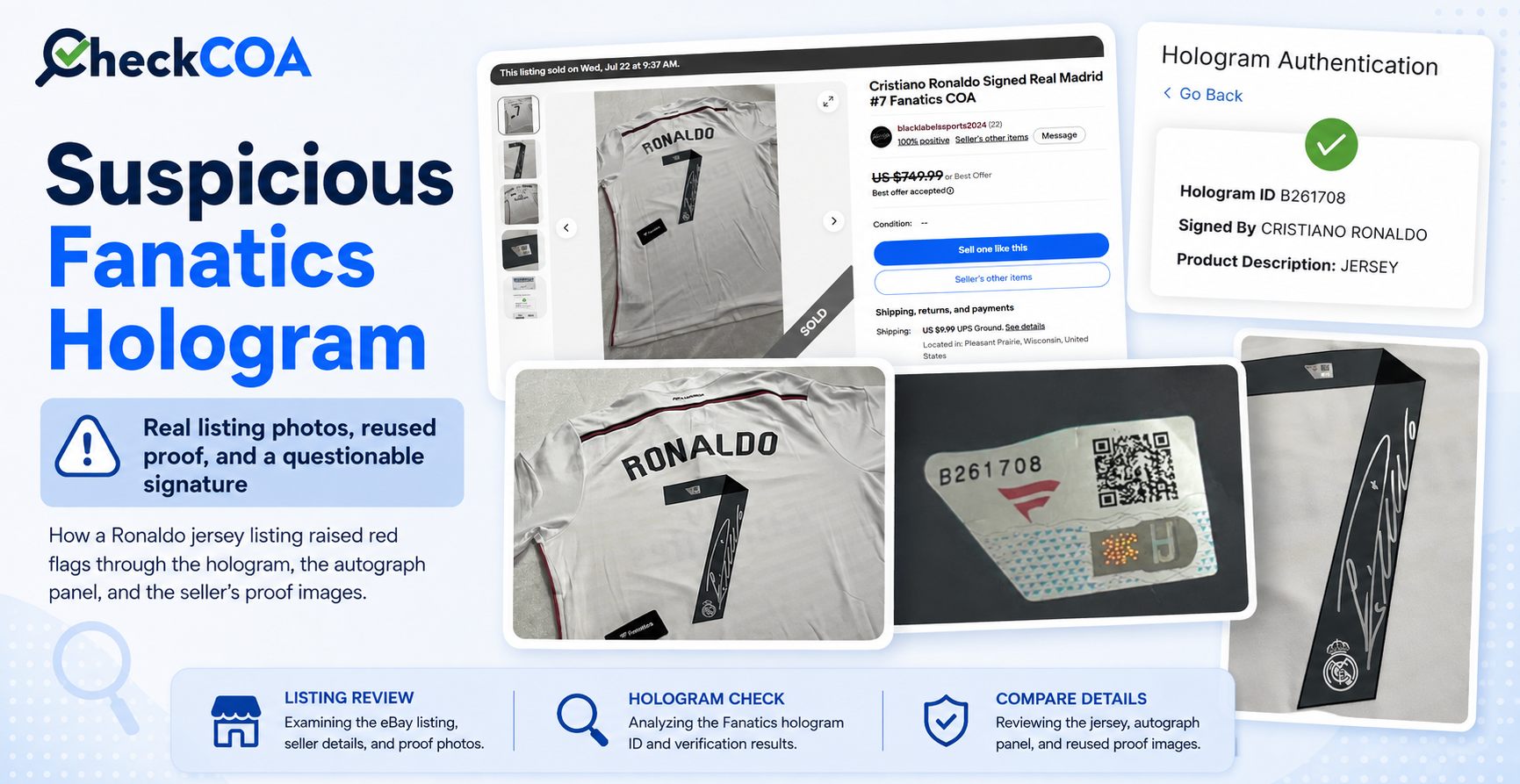
A Cristiano Ronaldo Real Madrid jersey sold on eBay for $749.99 on July 22, 2026. The listing showed what looked like a current Fanatics hologram. It had a QR code, the security pattern and a KeyCode window.
The number printed on it was B261708.
Scan that number and Fanatics returns a result for Cristiano Ronaldo. At first glance, that looks reassuring. The problem is that the lookup never asks for the three-letter KeyCode.
That is the warning.
What the Fanatics KeyCode is supposed to do
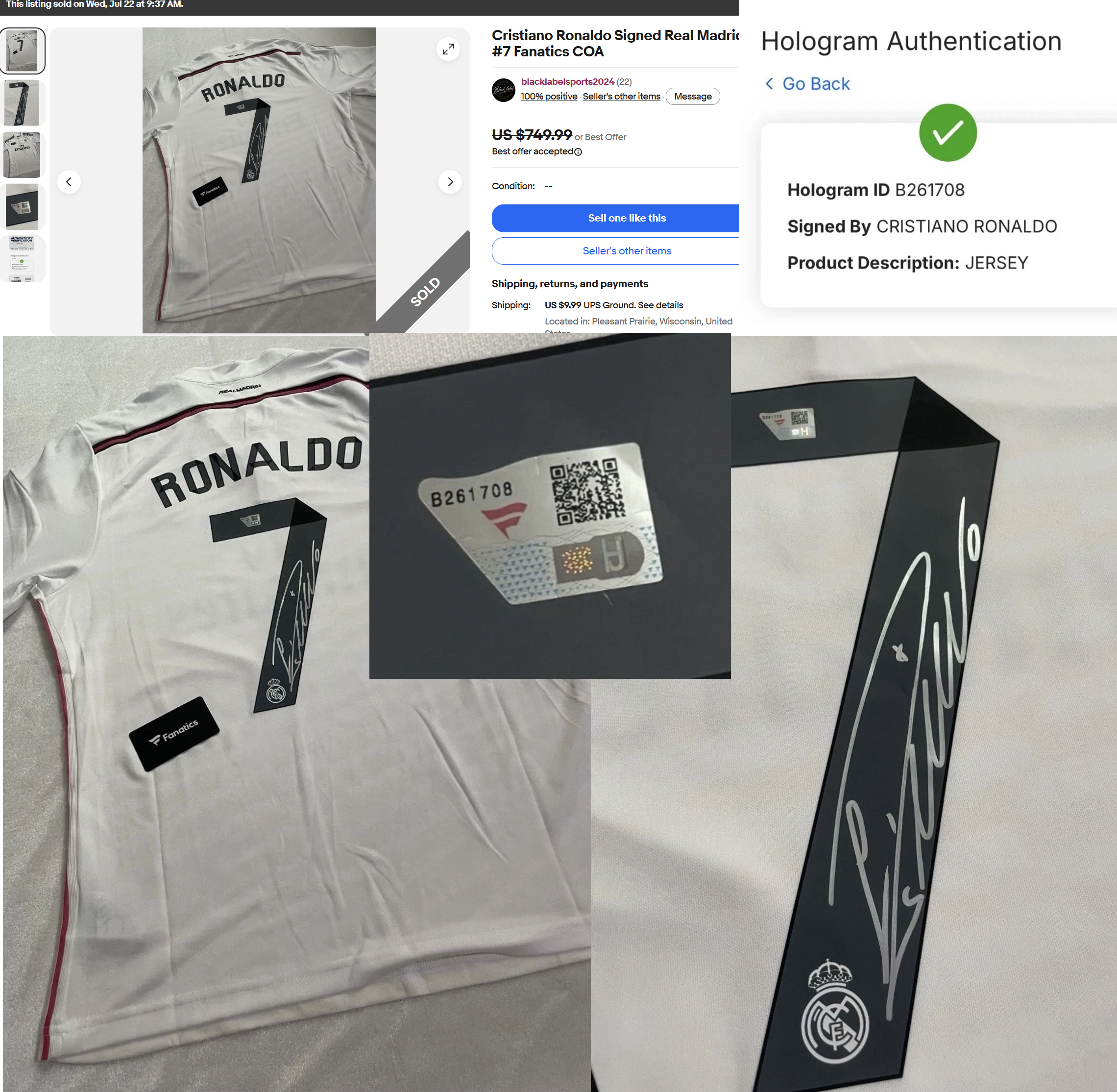
Fanatics introduced its current hologram design with three separate parts:
a QR code that opens the verification page;
a printed Unique ID;
a randomized three-letter KeyCode revealed by tilting the hologram.
The QR code and certificate number can be copied from a photograph. The KeyCode is the physical check. A buyer has to reveal the letters on the sticker and enter them during verification.
Fanatics' own reference image says the Unique ID and KeyCode work together to verify the collectible. A current-style hologram should not simply scan and return a result without that second step.
New sticker, old lookup
B261708 uses the old Fanatics number format: one letter followed by six digits. It comes from the system used before the KeyCode was introduced.
That matters because the legacy lookup accepts the certificate number by itself. It does not ask for a KeyCode.
The fake hologram uses the appearance of the current sticker but carries an old number. The QR code therefore opens the older verification path and returns a valid record without testing the security feature printed on the sticker.
The counterfeiter did not defeat the KeyCode. The counterfeiter avoided it.
New sticker, old lookup.
The certificate exists, but it belongs to a different jersey
The Fanatics record for B261708 identifies Cristiano Ronaldo and a jersey. CheckCOA also captured the team shown in the provider record: Manchester United FC.
The jersey sold on eBay was Real Madrid.
That mismatch is enough to show why a green verification result cannot be the end of the check. The number exists, but it does not belong on the item shown in the listing.
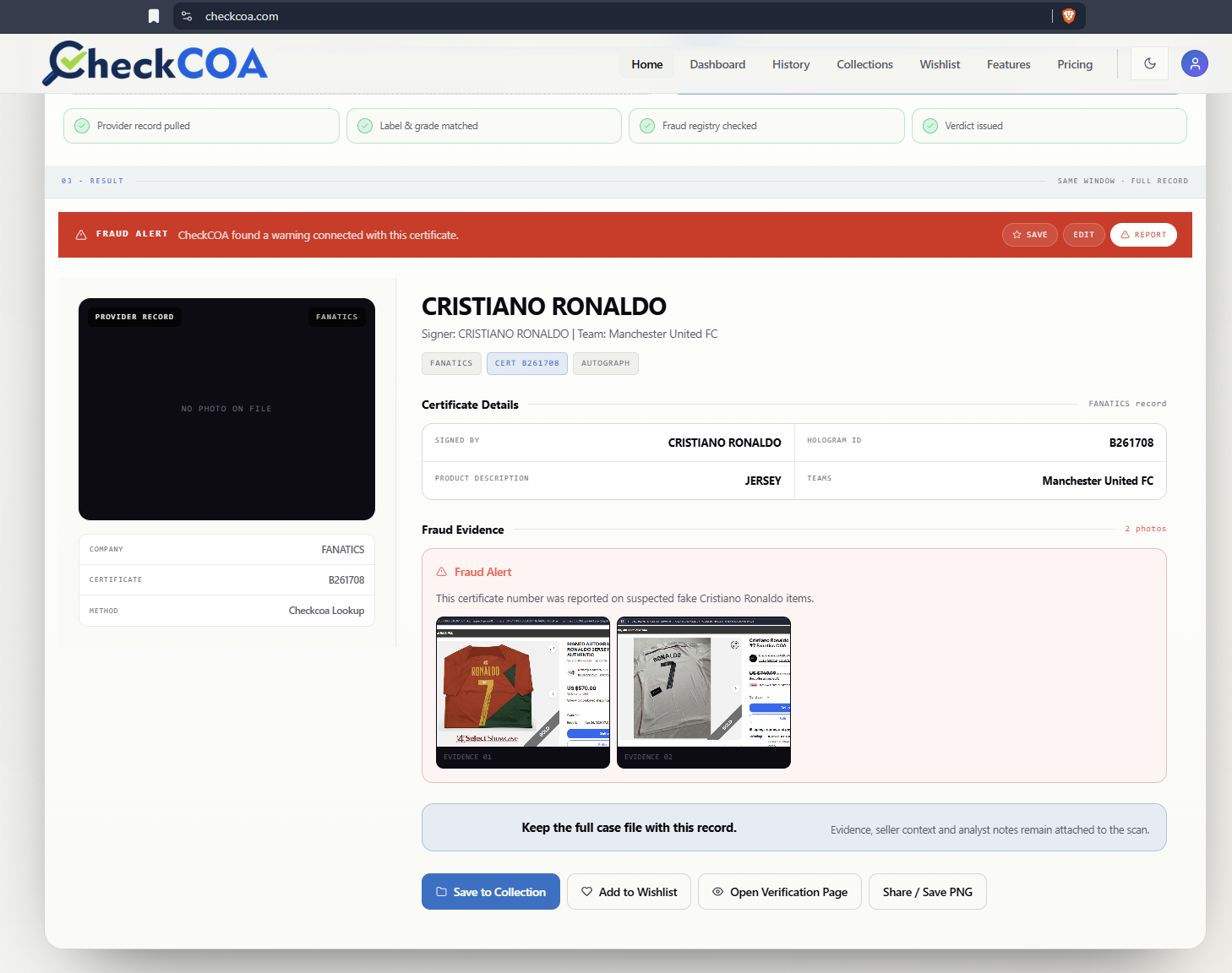
The same number had already appeared in the CheckCOA fraud registry before this sale. On June 14, B261708 was captured on another Ronaldo jersey offered by 4_sharp_corners for $570. The July sale came from blacklabelsports2024 at $749.99.
Same certificate number. Different jerseys. Different seller accounts.
Two nearby legacy numbers, B261703 and B261710, were also captured on Ronaldo items from the same earlier account. That pattern makes the reuse of B261708 harder to dismiss as one listing error.
A valid number does not authenticate the item
This is the mistake collectors make most often. They search a certificate number, see the correct athlete's name and stop.
A valid record proves that the number exists in the provider's database. It does not prove that the sticker is genuine. It does not prove that the sticker belongs to the jersey in front of you. It does not prove that the autograph is real.
For this item, the database returned Ronaldo. The seller had a Ronaldo jersey. That surface-level match was enough to make the listing look legitimate. The team mismatch and skipped KeyCode told a different story.
The new Fanatics hologram is not the problem. The full verification process is useful when the sticker actually requires its KeyCode. The weakness appears when a fake current-style sticker is printed with a legacy number and the old lookup is allowed to stand in for the new security check.
How to check a Fanatics hologram before buying
Look at the sticker design. If it has the current QR and KeyCode window, expect a KeyCode check.
Tilt the hologram and find the three letters.
Scan the QR code. If a current-style hologram returns a result without asking for the KeyCode, stop.
Compare the provider record with the actual item. Check the athlete, team, item type and any available photograph.
Search the certificate in CheckCOA to see whether it has appeared on another item or has a fraud warning attached.
Do not trust the green checkmark alone. In this case, the number passed while the jersey did not.
Check any Fanatics hologram free at checkcoa.com.
Comments 0